
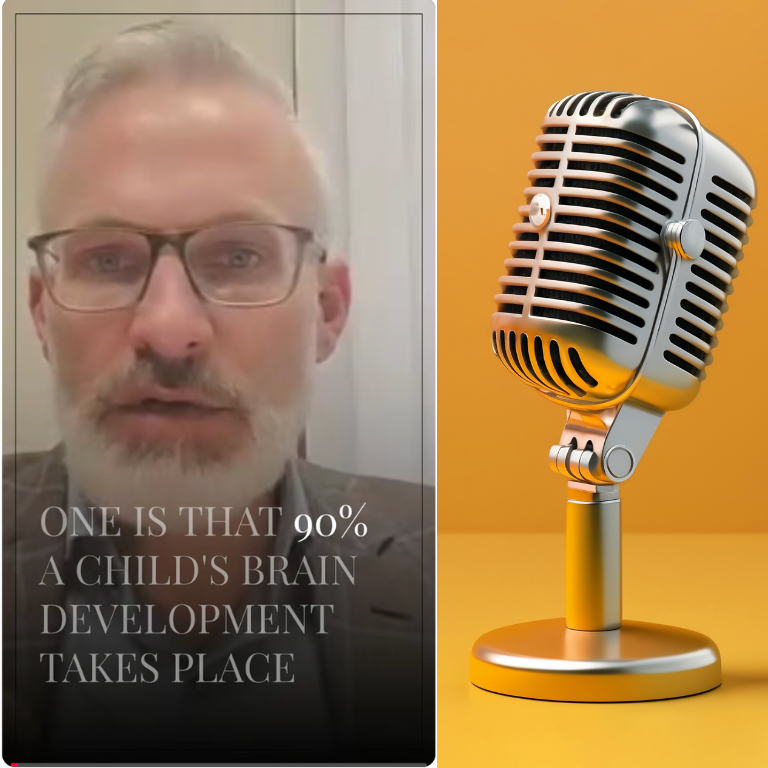
Automating by Design Podcast Series Featuring Executive Director Mark Larson
Kathy Swanson is more than just a consultant with over 30+ years of experience designing and implementing strategies and systems for entrepreneurs, small businesses, and even Fortune 100 teams. In her five part series with Mark, they explore how early childhood intervention is critical to families and the workforce.
Part 1: What does early childhood have to do with the future of our workforce?
Early Matters SA Executive Director Mark Larson shares a perspective that challenges how we think about talent, education, and economic growth.
One statistic stands out: 90% of a child’s brain development happens before age 5.
As Mark explains, many of the skills employers value most—curiosity, resilience, communication, and problem-solving—begin developing long before a child ever walks into a kindergarten classroom.
He also discusses how the rising cost of childcare is affecting working families and why investing in affordable, high-quality early childhood education is an investment in our workforce, our businesses, and our community.
Part 2: What happens when there isn’t a system to begin with?
Mark Larson introduces the term “asystemular” to describe a challenge many families know all too well.
When it comes to finding early childhood care, there isn’t a single, coordinated system to help families navigate their options.
Too often, parents are left searching on their own, trying to piece together information about availability, cost, quality, language, and financial assistance.
That’s why we’re working alongside community partners to build a centralized early childhood search tool—making it easier for families to find the care and learning opportunities that best meet their needs.
Part 3: How do you improve something if you can’t measure it?
Executive Director Mark Larson reflects on one of the biggest challenges facing early childhood: the lack of consistent data and measurement.
As Mark explains, meaningful change requires more than good ideas. It requires the ability to understand what is working, where gaps exist, and how to measure progress over time.
That’s why building stronger systems, better data, and greater coordination is such an important part of improving outcomes for young children and families.
Part 4: What does the childcare crisis look like for working families?
Mark Larson shares why the childcare challenge is more than a family issue—it’s a workforce issue affecting employers, businesses, and communities.
For many parents, the rising cost of childcare creates impossible financial decisions that can impact whether they stay in the workforce, reduce their hours, or leave a job they love.
Mark also discusses why these struggles often go unseen. Many families feel they should simply “figure it out,” even when the barriers they face are rooted in systems—not personal circumstances.
Part 5: Awareness is where meaningful change begins.
In the final segment of his conversation on Kathy Swanson’s Automating By Design podcast, Early Matters SA Executive Director Mark Larson shares why bringing people together is one of the most important steps toward solving our region’s early childhood challenges.
Each month, community members, business leaders, educators, and advocates gather for Early Matters SA’s First Friday Breakfast to learn, ask questions, and better understand how access to affordable, high-quality early childhood education impacts families, our workforce, and the future of San Antonio.
You don’t have to be an expert to be part of the conversation. You just have to be willing to learn.